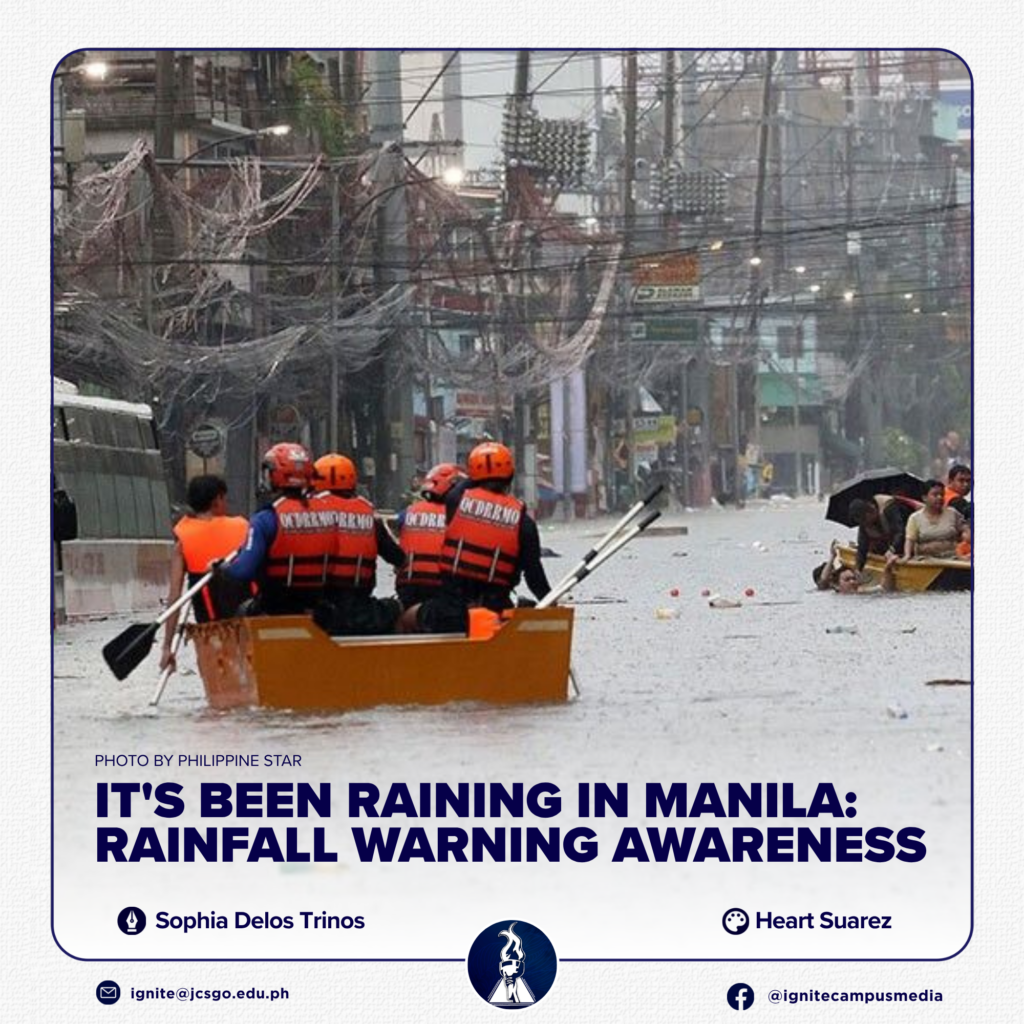
It’s been raining in Manila: Rainfall warning awareness
It’s been raining in Manila: Rainfall warning awareness
| Sophia Delos Trinos
“It’s been raining in Manila, hindi ka ba nilalamig?”
This line from Lola Amour’s song can be heard from Filipinos sharing their experiences with the rain as the southwest monsoon, dubbed “Habagat,” enters the country.
Habagat brings heavy rainfall and humid weather. It commonly lasts from late June to October. However, it can change each year, depending on ocean temperatures.
The typhoons this monsoon bring floods, landslides, and overall danger. The recent typhoons, Luis and Maymay, have affected 1,310,000 people.
People are well aware of the dangers of the rain but not exactly what each rainfall signal truly means. They may be familiar with class suspensions or phone alerts from the National Disaster Risk Reduction and Management Council (NDRRMC).
But there lies more beyond the simple alerts that every citizen should know.
What does each rainfall warning truly mean?
- Yellow Rainfall Warning: Rainfall reaches from 7.5mm to 15mm in an hour and is expected to continue for three more hours. People living in low-lying, flood-prone areas should stay updated and as alert as possible, as flooding may occur.
- Orange Rainfall Warning: Rainfall reaches from 15mm to 30mm within an hour, with heavy rain continuing for three more hours. It’s necessary to prepare for possible evacuation as water levels may rise.
- Red Rainfall Warning: Rainfall exceeds 30mm within an hour. Torrential rain is ongoing and expected to continue for three hours, posing a severe threat to citizens. Those living in high-risk areas should evacuate immediately, as serious flooding is expected or already happening.
Why is it important to know each warning?
- Timely alerts help with evacuation in zones prone to rainfall-induced soil saturation and landslides. It gives time for safeguards to be prepared before flooding occurs.
- These warnings reduce stress or cortisol levels by giving people time to prepare. It helps people feel that they are not being rushed for evacuation and be aware of how severe the rain is.
- Emergency services in high-risk areas are prepared to handle evacuations and rescues to help citizens.
Awareness is the deciding factor between safety and falling victim. These measures help you and your loved ones stay safe and know when safety is at risk.
So the next time you hear your phone ring because of a message from the NDRRMC, it’s not a sign to wish for class suspension but to constantly monitor updates about your area and stay indoors until the rain stops.