When the earth trembles without warning
| Reine Depra
The Pacific Ring of Fire never sleeps. Across the Philippines, the ground shook violently on the night of September 30, jolting residents of Cebu from their sleep. Thousands were forced to leave their homes, sleeping in tents under the open sky as the island tried to recover from the sudden tremors.
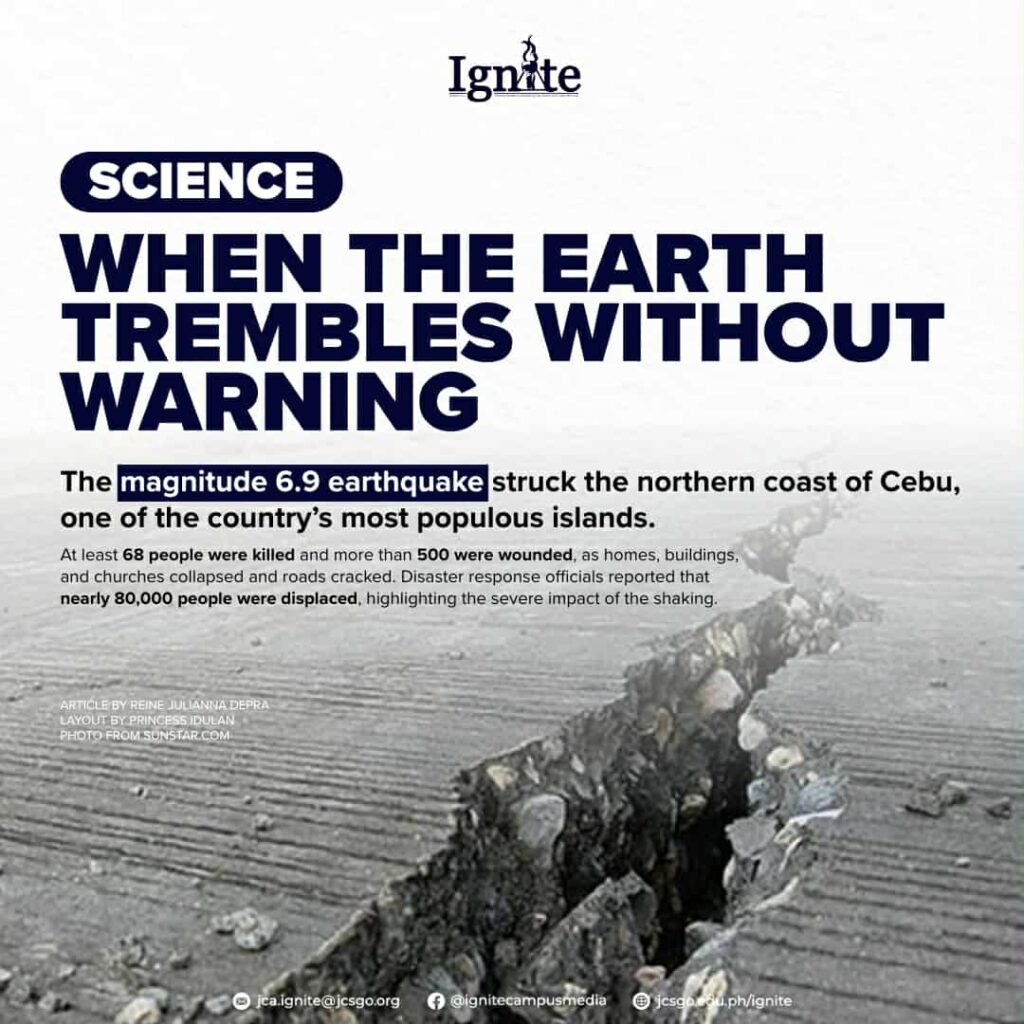
The magnitude 6.9 earthquake struck the northern coast of Cebu, one of the country’s most populous islands. At least 68 people were killed and more than 500 were wounded, as homes, buildings, and churches collapsed and roads cracked. Disaster response officials reported that nearly 80,000 people were displaced, highlighting the severe impact of the shaking.
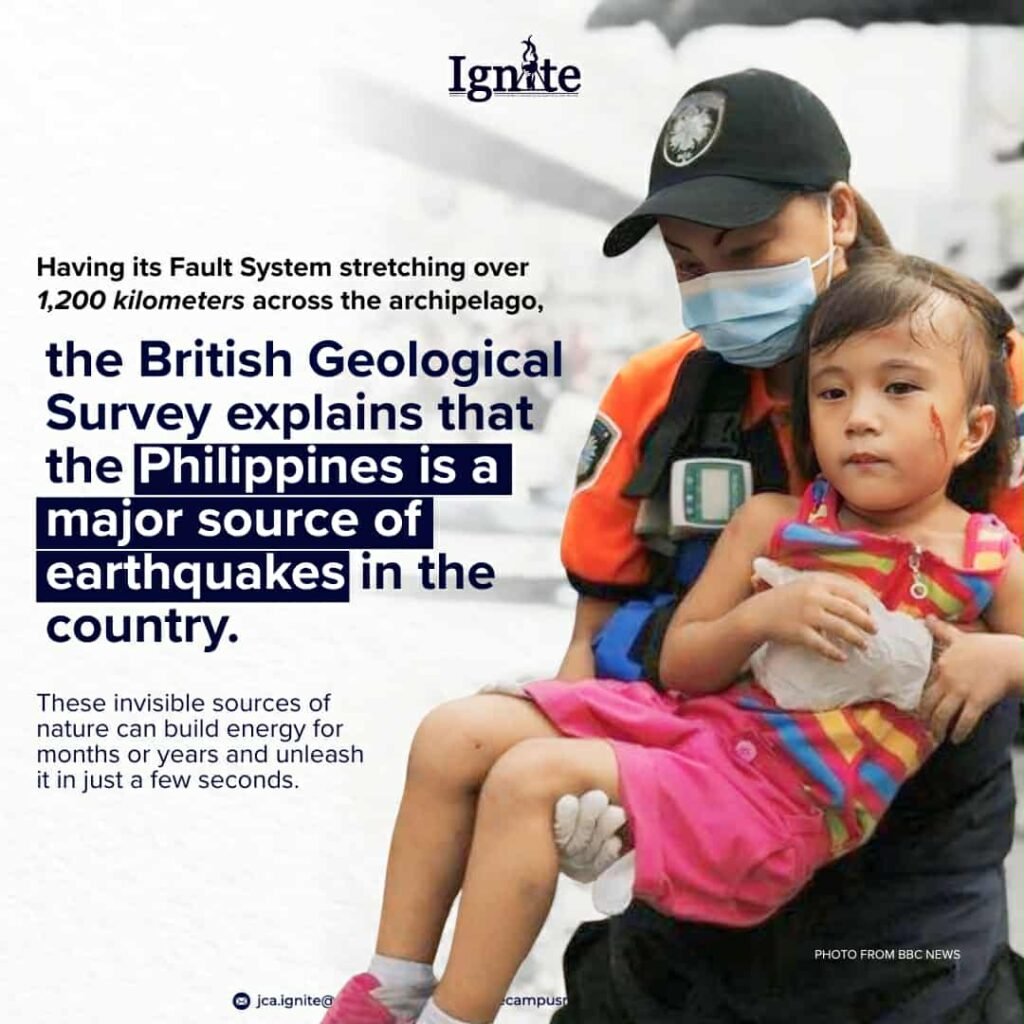
Earthquakes occur when massive tectonic plates beneath Earth’s crust suddenly shift, releasing built-up pressure. The Pacific Plate pushes beneath the smaller Philippine and Eurasian Plates, creating deep trenches and frequent quakes. The British Geological Survey explains that the Philippine Fault System—stretching over 1,200 kilometers across the archipelago—is a major source of earthquakes in the country. These invisible sources of nature can build energy for months or years and unleash it in just a few seconds.
In the Philippines, communities are learning to cope with reality. Schools conduct earthquake drills, and government agencies provide early warnings. Yet, the unpredictability of earthquakes means that every few seconds’ notice can be the difference between safety and disaster.
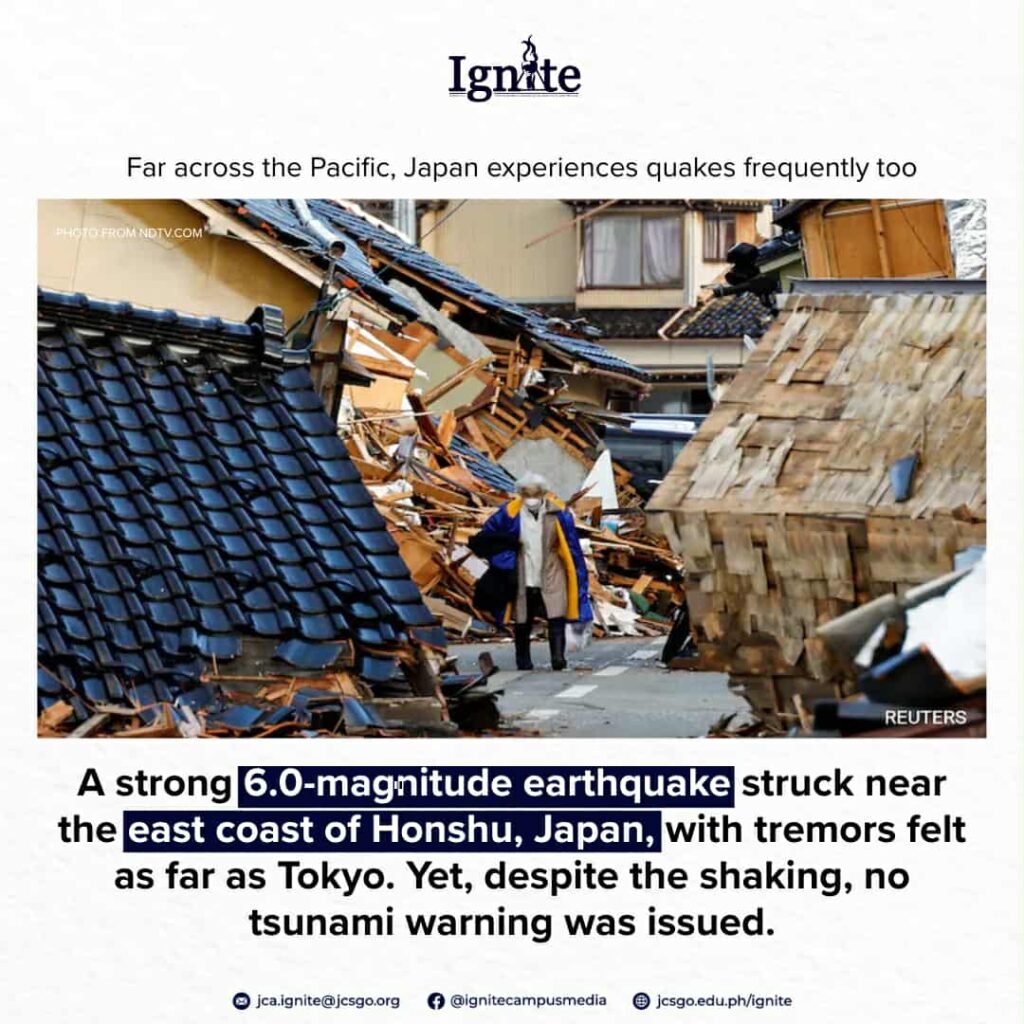
Far across the Pacific, Japan experiences quakes frequently too, showing how communities live with the constant threat of the moving earth. A strong 6.0-magnitude earthquake struck near the east coast of Honshu, Japan, according to the German Research Center for Geosciences (GFZ). The quake’s shallow depth, about 10 kilometers, made the shaking stronger—with tremors felt as far as Tokyo. Yet, despite the shaking, no tsunami warning was issued.
Japan’s location within the Pacific Ring of Fire makes such events almost inevitable. The country measures quakes using the Shindo scale, which tells how strongly people feel the shaking. In a place where modern buildings sway but rarely fall, each tremor still reminds its people how fragile the ground beneath them truly is.
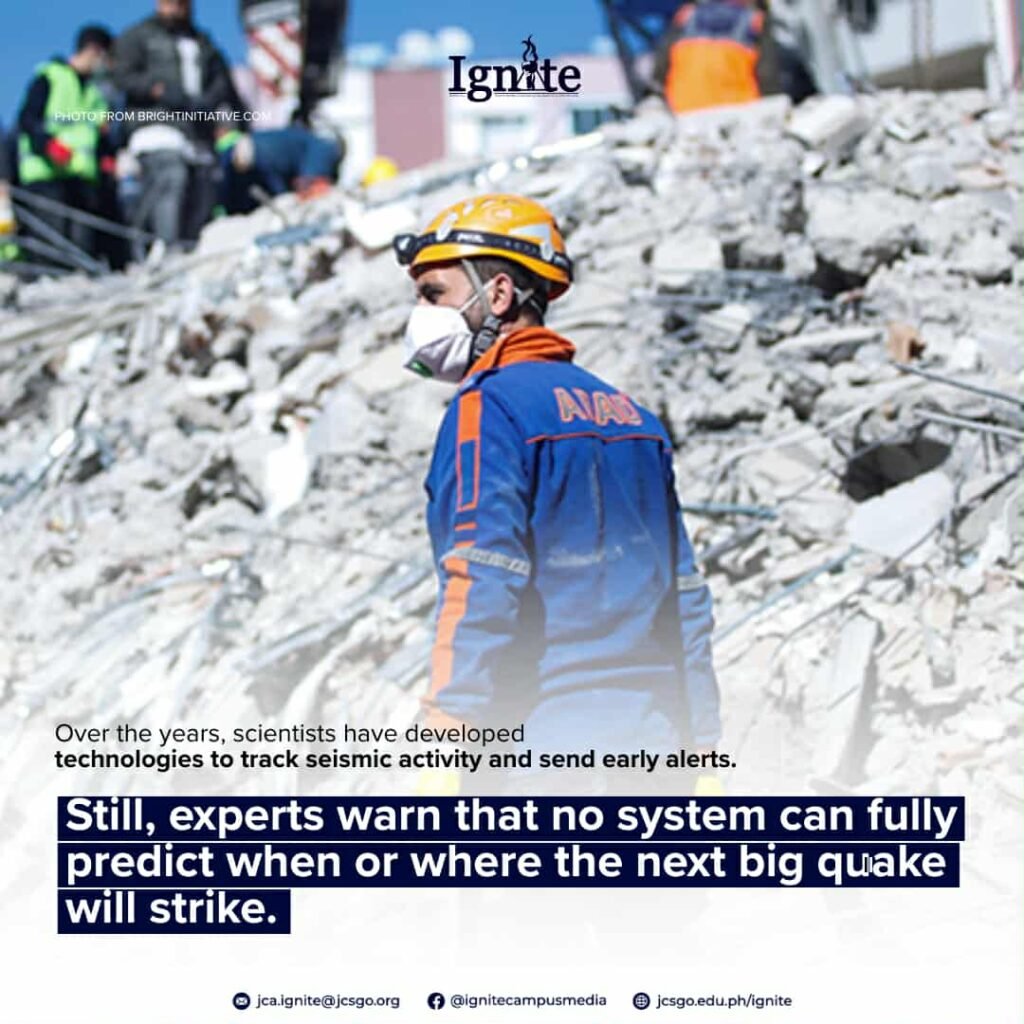
Over the years, scientists have developed technologies to track seismic activity and send early alerts. Japan’s earthquake monitoring network is one of the most advanced in the world. Seismographs detect the first waves of a quake and quickly send signals to cellphones, trains, and televisions—helping reduce panic and injuries.
Still, experts warn that no system can fully predict when or where the next big quake will strike. The Pacific Ring of Fire remains a zone of constant motion, stretching from the Americas to Asia, where 90% of the world’s earthquakes occur. For the Philippines, this means vigilance and readiness are always necessary.
The shaking that rippled through Cebu and across Japan is more than a natural event—it is a reminder of how alive our planet is. Beneath calm cities and quiet seas lies an earth that moves, breathes, and reminds humanity that it cannot be controlled. It’s an understanding of how the forces beneath our feet are just as important as science itself.
Layout by Princess Idulan