H₂Oh No!: The Microscopic Threat in Floods
H₂Oh No!: The Microscopic Threat in Post-Floods
| Jaime De Leon
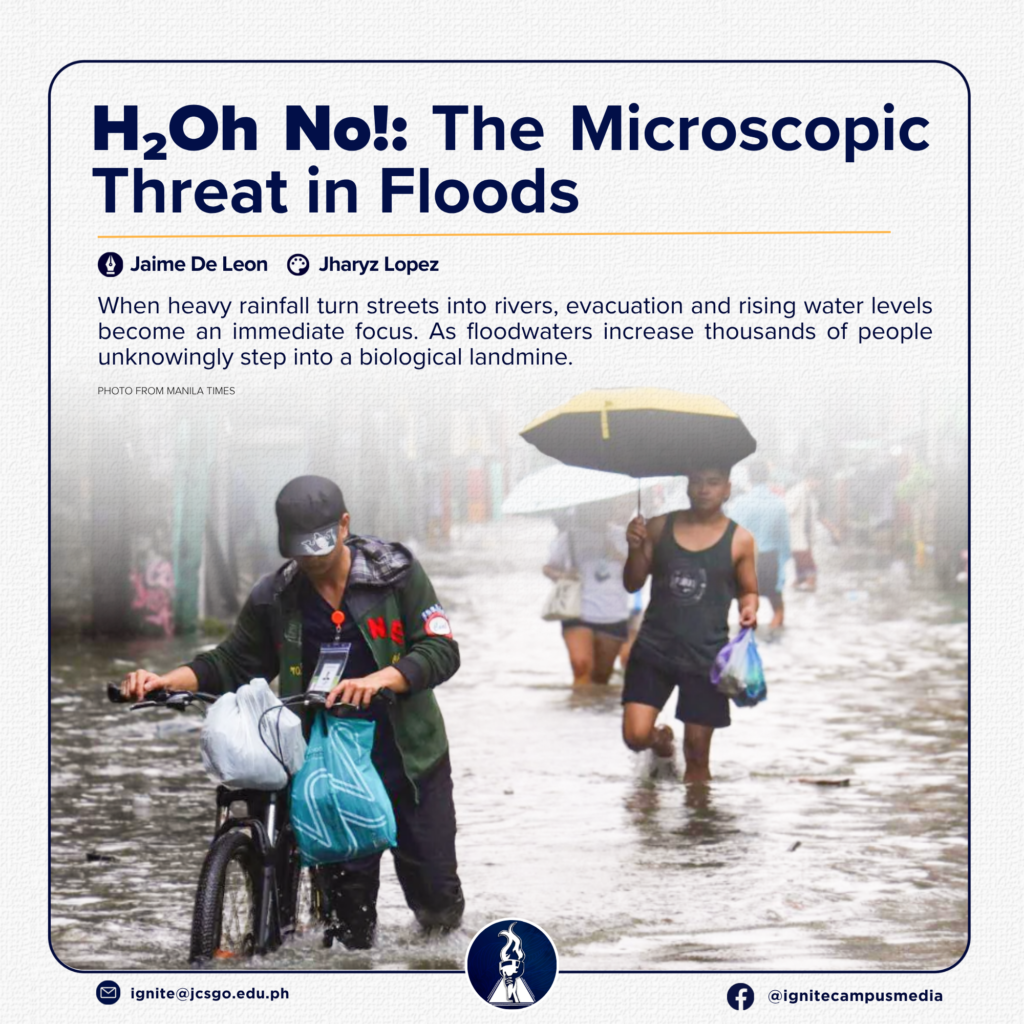
When heavy downpours turn streets into rivers, evacuation and rising water levels become an immediate focus. As floodwaters submerge major thoroughfares, thousands of people unknowingly step straight into a biological landmine.
According to the Department of Health (DOH), the Philippines is facing a sharp seasonal surge in Leptospirosis. Recent data show 5,835 nationwide cases amid relentless monsoonal rains. People have become susceptible to post-typhoon flooding, which exposes them to a deadly bacterium that can develop from flu-like symptoms into fatal multi-organ failure within days.
Understanding how this threat spreads is the first step in surviving the floodwaters.
The Transmission
The illness is driven by spirochetes. They are thin, corkscrew-shaped bacteria belonging to the genus Leptospira. These organisms live in the renal tubules of their animal hosts and continually secrete into the surrounding environment through infected urine.
This infected animal waste mixes into floodwater.
Unlike usual infections, transmission does not depend on accidental ingestion. Instead, Leptospira enters the body through even the tiniest skin abrasions, unhealed cuts, or through direct contact with mucous membranes of the eyes, nose, and mouth.
Clinical Progression
The pathogen invades the blood vessels after a five- to 14-day incubation period, resulting in a two-stage disease process.
The illness usually begins with the early or anicteric phase, characterized by a sudden spike in temperature, painful frontal headaches, conjunctival suffusion involving reddened eyes without purulent discharge, and muscle ache in the calves and lumbars.
Failure to treat the early phase may result in progression to the icteric phase (Weil’s Disease). During this stage, the spirochetes breach the inner linings of the blood vessels.
This causes widespread vascular leakage, which leads to severe yellowing of the skin and eyes, liver failure, bleeding inside the lungs, and in some cases—the sudden loss of blood circulation.
Prevention and Exposure Response
With worsening monsoon conditions, prevention of Leptospirosis requires rapid public awareness and medical timeliness. Recognizing early symptoms and taking immediate action after flood exposure remains the nation’s critical defense against a preventable urban health crisis.
Flooding is nothing new to the Philippines, but exposure risks can be minimized. Epidemiologists point out that physical barriers and immediate clinical interventions are fundamental to breaking the chain of transmission.
Urban drainage systems frequently fail under heavy rainfall, transforming stagnant floodwaters into concentrated bacterial ground. Without widespread community adherence to basic safety measures, even minor wading incidents can escalate into severe hospitalization.
Breaking this transmission cycle relies heavily on individual measures before, during, and after flood exposure. Health experts advise the following action plan for those who will pass through flood zones:
- Barrier Protection: Avoid exposure to floodwaters when possible. If entry is unavoidable, use knee-high rubber boots and waterproof protective clothing.
- Wound Care: Cover any existing cuts, scratches, or open wounds immediately before going outdoors to prevent potential bacterial entry points.
- Rodent Control: Cover open household food and drinking containers to prevent rodent contamination. Practice proper waste management to prevent rat breeding sites.
- Immediate Decontamination: Thoroughly wash any part of the body that came into contact with the water with antibacterial soap and clean running water.
- Post-Exposure Prophylaxis: Seek medical evaluation at a local health center within 24 to 48 hours after flood contact to receive prescribed prophylactic antibiotic treatment.
Because when the heavy downpours subside and floodwaters recede, the biological landmine does not simply wash away. Surviving the storm requires a shift from passive evacuation to active post-defense because recognizing the warning signs and acting early isn’t just basic hygiene; it’s the difference between stepping into a critical health crisis and stepping back out safely onto dry land.